
The Freelancer’s Survival Guide: 4 Essential Bookkeeping Tips
When you are focused on hitting client deadlines and delivering great work, it is easy to put administrative financial tasks on the back burner. However, proactive financial habits are what keep a freelance business sustainable.
Neglecting your ledger doesn't just cause stress during tax season—it can expose you to severe legal vulnerabilities. Implement these four essential bookkeeping practices to ensure your freelance operations run smoothly.
1. Establish Your Legal Business Foundation
Before you send your first invoice, you must ensure your freelance business is properly registered. Operating in the dark can lead to compliance issues with local authorities down the road.
Licensing and Permits: Depending on your location, you may need a municipal business license, a home occupation permit, or state-level registration.
Structural Compliance: Determine if you will operate as a Sole Proprietor or protect your personal assets by forming a Single-Member LLC.
Professional Guidance: When in doubt, consulting an accountant or legal advisor ensures you satisfy every local, state, and federal requirement from day one.
2. Maintain Scrupulously Detailed Records
You cannot manage what you do not measure. Tracking every incoming client payment and outgoing operational cost is the cornerstone of baseline financial stability.
What to Track: Keep absolute records of signed client contracts, outgoing invoices, bank processing statements, and receipts for every single business expense (including software subscriptions, home office utilities, and marketing fees).
The Payoff: Thorough records take the guesswork out of monthly cash flow tracking and ensure you never lose track of unpaid invoices.
3. Commit to Absolute Financial Transparency
Transparency with your records—and with tax authorities—is non-negotiable. This means recording and reporting every single dollar of gross income, including cash, checks, peer-to-peer apps, or digital bank transfers.
Audit Protection: Underreporting income or failing to keep legitimate receipts for claimed deductions is an immediate red flag for tax audits.
Accurate Budgeting: Honest bookkeeping gives you an accurate snapshot of your actual business margins, making it much easier to project future growth and plan your true cost of living.
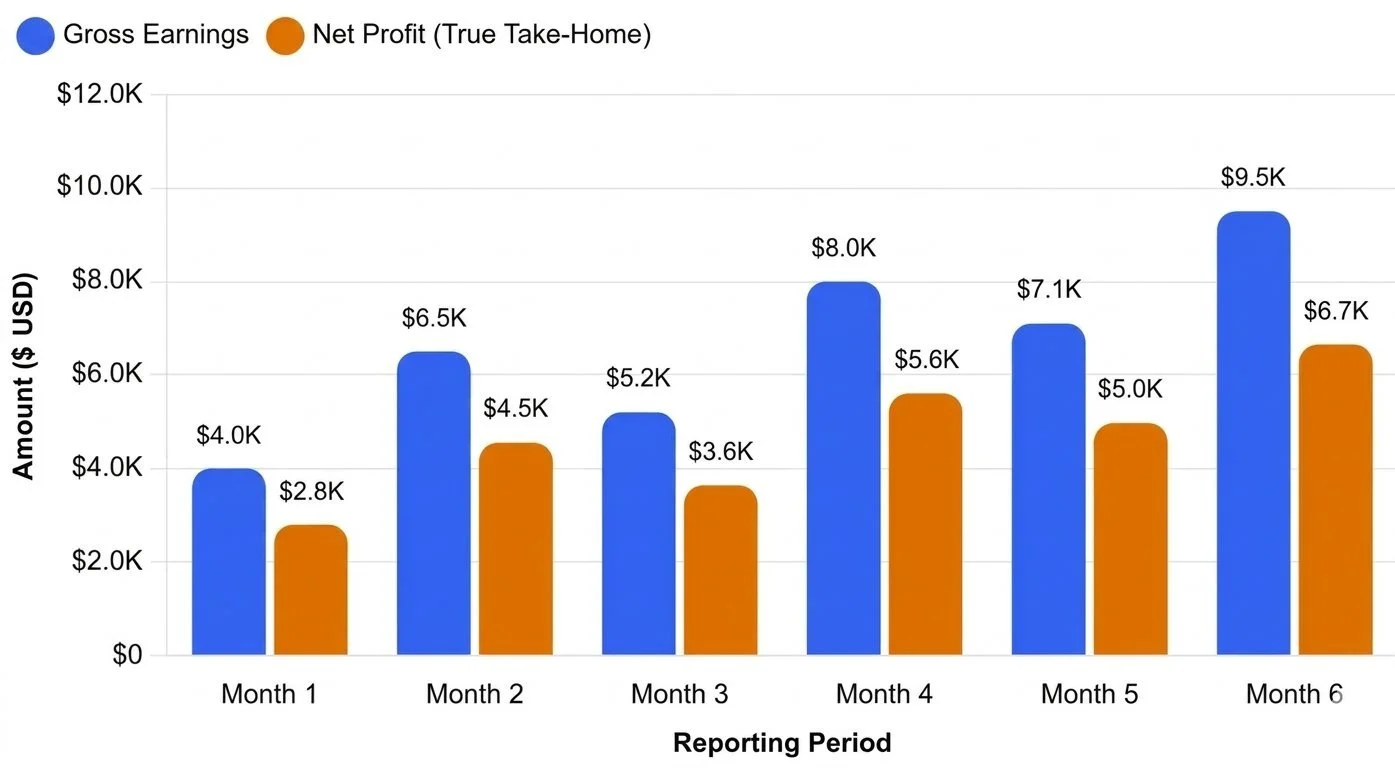
4. Enforce the 30% Tax Withholding Rule
Because freelancers do not have a traditional employer withholding taxes from their paychecks, you are entirely responsible for funding your own income and self-employment taxes.
The Rule of Thumb: Automatically route at least 30% of every incoming client payment into a dedicated tax savings account.
The Benefit: Sticking to this discipline guarantees you can comfortably cover your quarterly estimated tax payments without dipping into personal funds or facing expensive penalty fees.
Build a Thriving Freelance Business with Peace of Mind
Freelancing is an incredible path to independence, but it requires active financial discipline. By legally structuring your business, documenting every transaction, staying completely transparent, and preparing for your tax liabilities, you can focus on your craft without the weight of financial anxiety.
If managing your own books is draining the time you should be using to bill clients, let us help.
Contact Poe Bookkeeping Today to explore our simplified, stress-free accounting packages designed explicitly for modern freelancers and creative entrepreneurs.