
Financial Freedom: Essential Bookkeeping Tips for the Self-Employed
Being self-employed brings incredible freedom, but it also places the full weight of financial responsibility squarely on your shoulders. Tracking your own cash flow is the only reliable way to measure your actual profitability and protect your personal assets.
If you manage your own operations, implementing these five practical bookkeeping habits will help you maintain an audit-proof business.
1. Build a Strict Monthly Budget
A budget is your financial roadmap. It allows you to track variable income against fixed operating costs, giving you complete visibility over your monthly cash runway.
The Benefit: Seeing exactly where your revenue goes allows you to make rapid spending adjustments before minor cash crunches become major operational issues.
2. Standardize Your Document Filing System
Important documents—such as client contracts, legal agreements, vendor invoices, and past tax returns—should never sit scattered across a download folder or email inbox.
The Fix: Establish a clear, logical digital folder hierarchy organized by fiscal year and document type. Keeping these core records secure ensures you can access vital files instantly during a contract dispute or an official tax audit.
3. Automate Receipt and Bill Tracking
Scattering receipts on your desk or leaving digital invoices unlogged makes it impossible to claim all your legal business deductions.
The Fix: Create a weekly routine to digitize every receipt, statement, and vendor bill. Having these documents organized chronologically simplifies your monthly expense logging and saves dozens of hours during tax season.
4. Aggressively Save for Quarterly Taxes
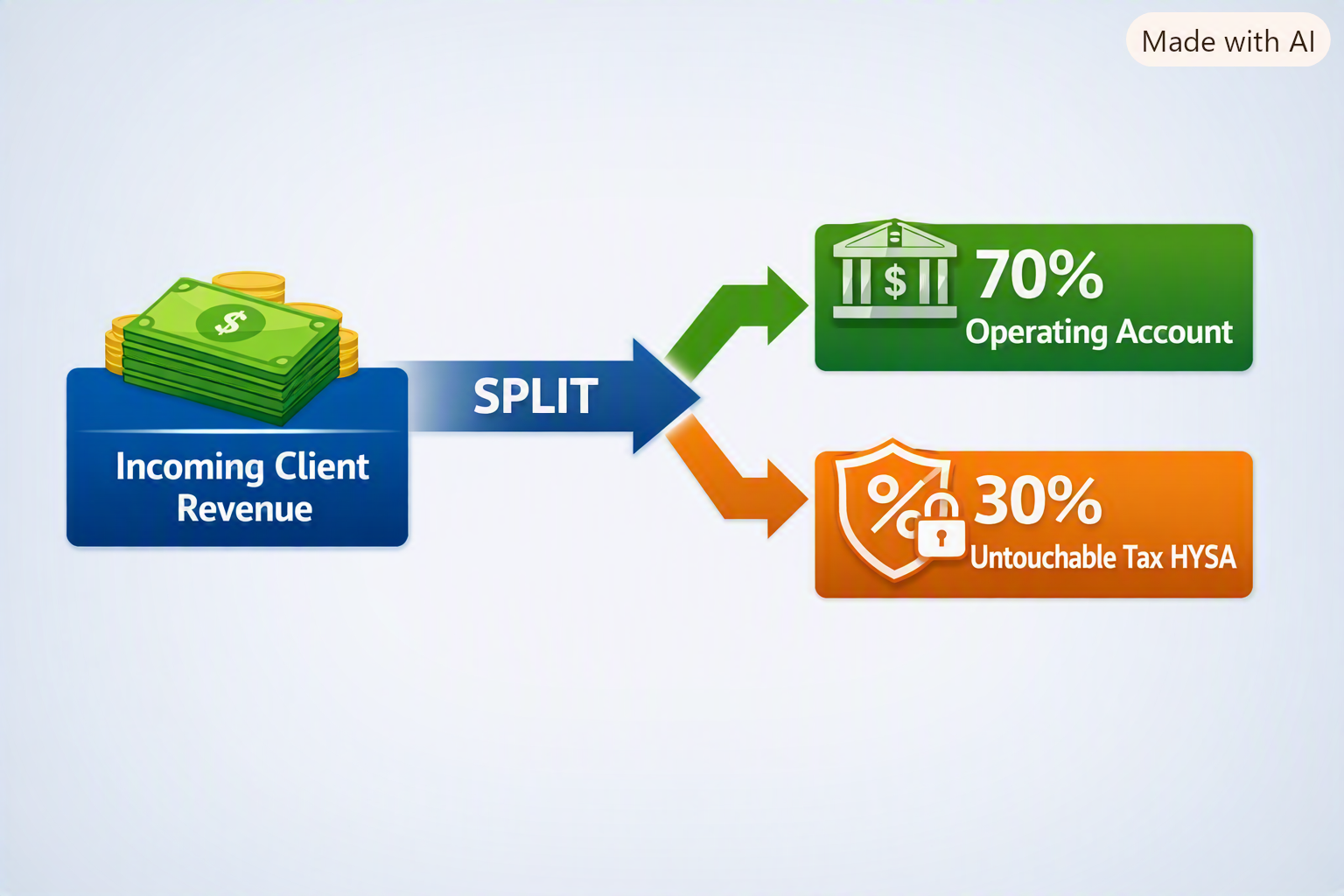
Unlike traditional employees, self-employed individuals do not have taxes automatically withheld from their income. Failing to plan for this reality can lead to massive end-of-year penalties and surprise tax bills.
The Golden Rule: Set aside 25% to 30% of every single dollar of gross revenue into a dedicated, high-yield tax savings account. Treat this money as completely untouchable until your quarterly or annual tax payments are due.
5. Know When to Delegate to a Professional
As a solopreneur, your time is your most valuable asset. Spending hours wrestling with spreadsheets, bank reconciliation, or payroll calculations takes you away from billable client work and core revenue generation.
Outsourcing your financial management to an expert gives you absolute peace of mind and frees up your schedule to focus entirely on scaling your brand.
Take the Stress Out of Self-Employed Finances
Managing your own books shouldn't mean drowning in paperwork. If your accounting tasks are falling by the wayside, professional intervention is the smartest investment you can make for your business's longevity.
Contact Poe Bookkeeping Today to discover our custom financial tracking packages designed specifically to support self-employed professionals and independent contractors.