
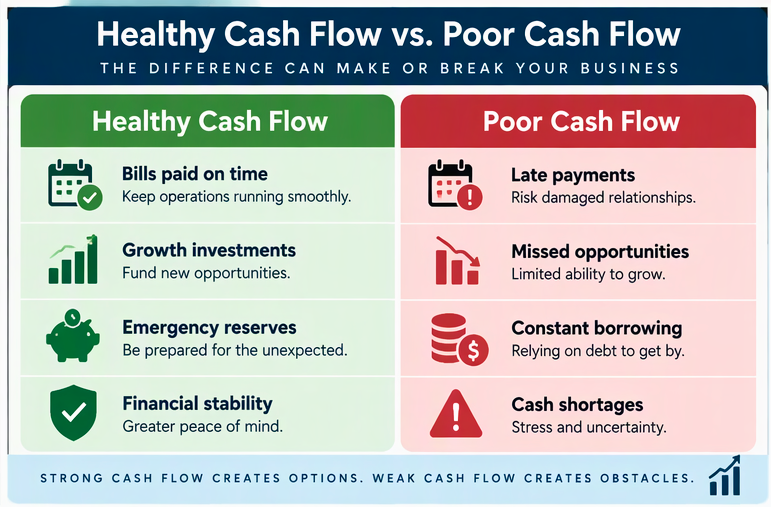
No matter how profitable your business appears on paper, poor cash flow can quickly create financial stress. Many businesses fail not because they lack customers or sales, but because they run out of cash at critical moments. Effective cash flow management ensures you have the money needed to cover expenses, invest in growth opportunities, and maintain financial stability.
In this article, we'll explore practical strategies to help you manage your cash flow, avoid common pitfalls, and build a stronger financial foundation for long-term success.
Why Cash Flow Matters
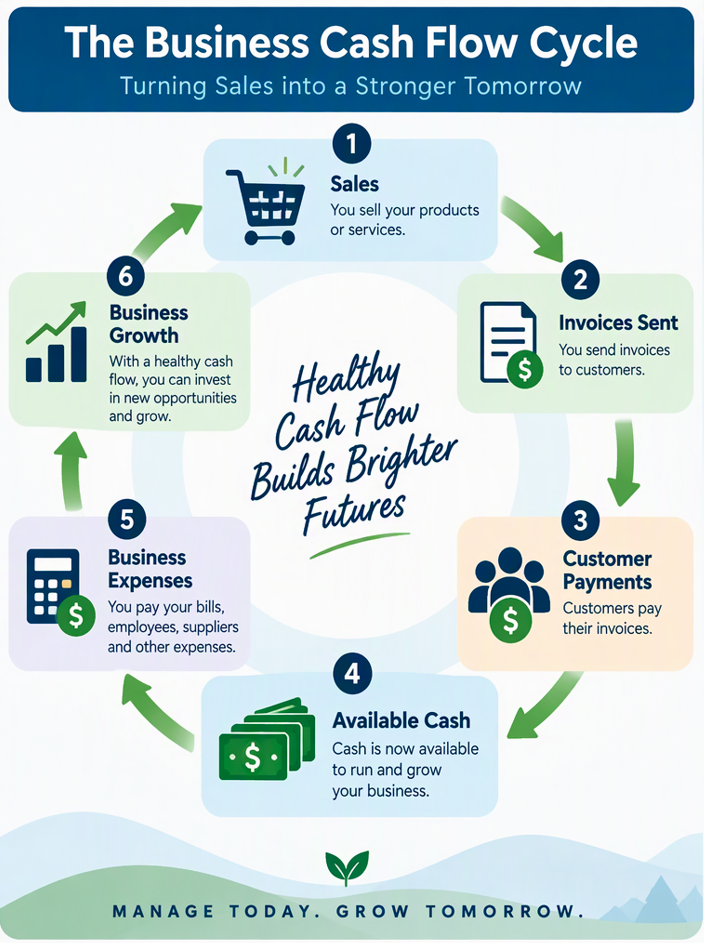
Cash flow represents the movement of money into and out of your business. Positive cash flow means more money is coming in than going out, while negative cash flow indicates the opposite.
When cash flow is healthy, your business can:
Pay employees and suppliers on time
Cover operating expenses without stress
Invest in equipment, marketing, or expansion
Handle unexpected emergencies
Reduce dependence on loans and credit
Without proper cash flow management, even profitable businesses can struggle to meet their financial obligations.
1. Build a Cash Flow Forecast
A cash flow forecast is one of the most powerful financial planning tools available to business owners. It estimates future cash inflows and outflows over a specific period, helping you anticipate financial challenges before they occur.
Benefits of Cash Flow Forecasting
Identifies potential cash shortages in advance
Helps plan major purchases and investments
Supports better budgeting decisions
Improves financial confidence and stability
Review and update your forecast regularly to ensure it reflects current business conditions and market changes.
2. Keep a Close Eye on Accounts Receivable
Outstanding invoices can create significant cash flow problems. When customers delay payments, cash that should be available for operations remains tied up in receivables.
Best Practices
Send invoices promptly
Establish clear payment terms
Offer convenient payment options
Follow up quickly on overdue accounts
Consider early-payment incentives
The faster you collect payments, the healthier your cash flow will be.
3. Manage Inventory Wisely
Inventory can either support or drain your cash flow.
Excess inventory ties up valuable cash and increases storage costs. On the other hand, insufficient inventory can result in lost sales and dissatisfied customers.
Smart Inventory Management Tips
Monitor inventory levels regularly
Analyze sales trends and seasonal demand
Eliminate slow-moving products
Reorder strategically instead of overstocking
Finding the right balance keeps cash available while ensuring customers receive what they need.
4. Control Operating Expenses
Controlling expenses doesn't mean cutting corners. It means spending strategically and ensuring every dollar contributes value to the business.
Areas to Review
Subscription services
Vendor contracts
Utility expenses
Marketing costs
Administrative expenses
Look for opportunities to negotiate better pricing, eliminate unnecessary spending, and streamline operations. Small savings across multiple areas can significantly improve cash flow over time.
5. Avoid Becoming Dependent on Debt
Loans and credit lines can provide temporary financial relief, but relying too heavily on borrowed funds can create long-term cash flow issues.
Interest payments increase expenses and reduce flexibility.
Reduce Debt Reliance By:
Improving collections processes
Negotiating extended supplier payment terms
Building a cash reserve
Reducing unnecessary costs
Increasing operational efficiency
The goal is to use debt strategically rather than as a permanent solution.
Common Cash Flow Mistakes to Avoid
Many businesses experience cash flow challenges because of avoidable mistakes.
Watch Out For:
❌ Failing to forecast future cash needs
❌ Waiting too long to collect overdue invoices
❌ Overstocking inventory
❌ Ignoring small recurring expenses
❌ Expanding too quickly without sufficient cash reserves
❌ Relying heavily on credit cards or loans
Avoiding these pitfalls can prevent financial stress and improve overall business performance.

Final Thoughts
Cash flow management is not a one-time task. It requires ongoing attention, careful planning, and disciplined financial decision-making. By creating accurate cash flow forecasts, monitoring receivables, managing inventory effectively, controlling expenses, and minimizing unnecessary debt, your business can maintain financial stability and position itself for sustainable growth.
Remember: Profitability may measure success, but cash flow keeps your business alive.