
Maintaining accurate financial records is crucial for businesses to make informed choices, optimize monthly cash flow, and ensure strict compliance with regional tax regulations.
Implementing disciplined, daily financial habits safeguards your company from operational blind spots. Here are the core best practices every business should deploy to streamline its accounting workflow.
1. Separate Business and Personal Expenses
Mixing personal and business funds is one of the most common accounting mistakes small business owners make. Piercing the corporate veil makes it incredibly difficult to track true operational costs and creates severe vulnerabilities during a tax audit.
The Solution: Always maintain a completely dedicated business checking account and corporate credit card. Never use personal funds for company purchases.
2. Standardize with a Chart of Accounts (COA)
A Chart of Accounts is an organized, structured index of every financial bucket your business utilizes to log transactions. Standardizing your assets, liabilities, equity, revenue, and expenses provides a consistent framework that makes analyzing historical financial trends simple.
3. Digitize and Organize Every Receipt
Do not rely on memory or faded paper slips. Keeping clear records of every single transaction ensures your deductions are recorded accurately and provides indisputable legal evidence for tax authorities.
Modern Tip: Use cloud storage or mobile receipt-scanning apps to instantly attach digital invoices directly to their corresponding entries in your ledger.
4. Deploy Dedicated Accounting Software
Manual spreadsheets leave your business vulnerable to costly formulas and human entry errors. Utilizing modern, secure cloud accounting software automates repetitive data entry, links directly to your bank feeds, and gives your leadership team real-time visibility into company health.
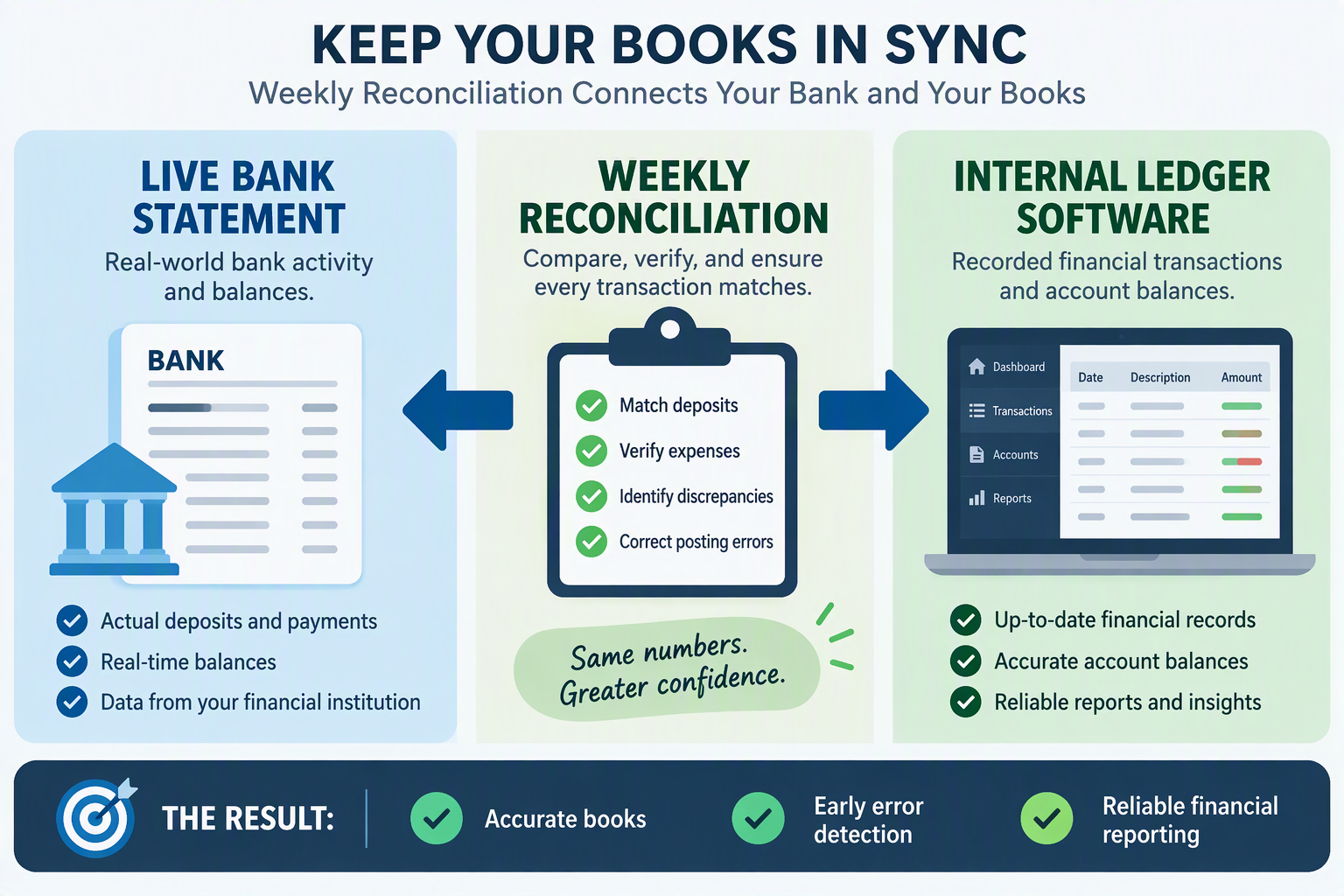
5. Reconcile Bank Statements Weekly
Reconciliation is the process of cross-referencing your internal books against your actual live bank and credit card statements. Checking these balances regularly allows you to immediately catch unauthorized charges, resolve bank processing errors, and eliminate fraudulent activity before it scales.
6. Perform Routine Reviews of Financial Reports
Your books are more than just a tool for tax season; they are a real-time roadmap. Regularly analyzing your core financial reports—such as your Balance Sheet, Cash Flow Statement, and Profit & Loss (P&L)—helps you monitor operational progress, track profit margins, and identify immediate areas for cost reduction.
Ready to Streamline Your Business Finances?
Implementing these best practices requires consistent time, deep attention to detail, and a specialized understanding of accounting principles. If managing your daily ledger is distracting you from scaling your operations, outsourcing is the most cost-effective solution.
Contact the Experts at Poe Bookkeeping Today to discover how our tailored professional management can keep your business compliant, optimized, and ready for long-term growth.