Beyond the Ledger: 3 Crucial Things Bookkeepers Do for Small Businesses
Small business owners are notorious for wearing too many hats. However, there is one critical operational pillar that should never be treated as a secondary chore: bookkeeping.
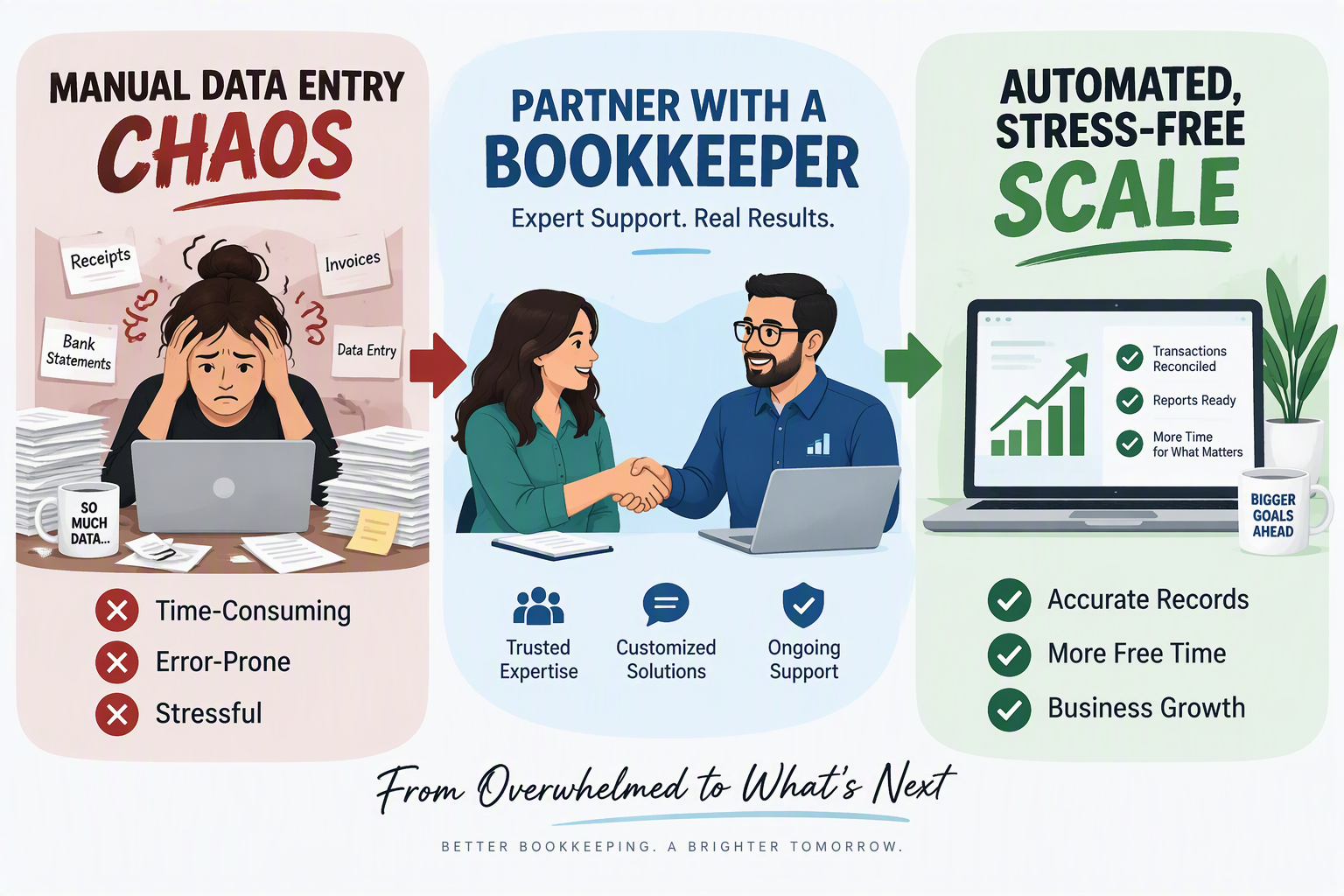
Bookkeeping is the ongoing process of systematically tracking financial transactions to ensure your corporate records remain completely accurate, current, and audit-ready. While it may seem daunting to manage alongside daily operations, a professional bookkeeper does far more than just log numbers—they act as a catalyst for your company's growth.
Here are three vital ways a professional bookkeeper protects and optimizes your business.
1. Maintain Meticulous Control Over Your Cash Inflows and Outflows
The baseline duty of a bookkeeper is to build an unshakeable, transparent record of your daily financial transactions. This requires absolute precision across several moving parts:
Transaction Logging: Systematically recording every single item of revenue earned and expense incurred.
Account Reconciliation: Cross-referencing internal financial ledgers directly against live bank and credit card statements to catch errors or unauthorized fees instantly.
Discrepancy Elimination: Ensuring that your internal books perfectly match reality so that you are never making operational decisions based on ghost balances.
2. Implement Scalable Organization and Time-Saving Systems
Bookkeeping is a relentless, time-consuming process. When a business owner attempts to handle it alone, it frequently falls behind, creating massive panic when tax deadlines loom. A bookkeeper steps in to implement bulletproof structure:
Workflow Automation: Setting up digital, cloud-based accounting platforms to automate invoicing, receipt scanning, and recurring expense tracking.
Deadlines & Compliance: Establishing clear schedules for vendor bills, payroll allocations, and quarterly state tax filings so you never face costly penalty fees.
Operational Freedom: By taking the entire weight of financial administration off your plate, a bookkeeper hands you back hours of monthly schedule freedom to focus on client acquisition, marketing, and core innovation.
3. Deliver High-Level Insights on Performance and Profitability
Many business owners treat bookkeeping as a static obligation meant strictly for tax compliance. In reality, your books are an active, real-time map of your operational efficiency. Bookkeepers unlock this hidden data to provide fractional financial analysis:
Trend Identification: Spotting seasonal revenue fluctuations or sudden spikes in variable vendor costs before they impact your net margins.
Cost Reduction: Pinpointing subtle, leaking expenses or redundant software subscriptions that can be immediately eliminated to boost overall profitability.
Growth Forecasting: Evaluating the financial feasibility of major upcoming corporate moves, such as hiring new employees, purchasing inventory, or launching new service lines.
Stop Managing Your Ledger Alone—Focus on Your Empire
Bookkeeping isn't just a once-a-year chore; it is a continuous, living system that dictates your daily cash runway and long-term trajectory. Outsourcing this complexity to a certified professional ensures your records stay flawless while freeing up your energy to drive your business forward.
Connect with Poe Bookkeeping Today to schedule your free consultation. Let our certified team streamline your accounts, protect your margins, and turn your financial data into a powerful engine for corporate success.