
Master Your Month: 6 Key Bookkeeping Checklist Items for Small Businesses
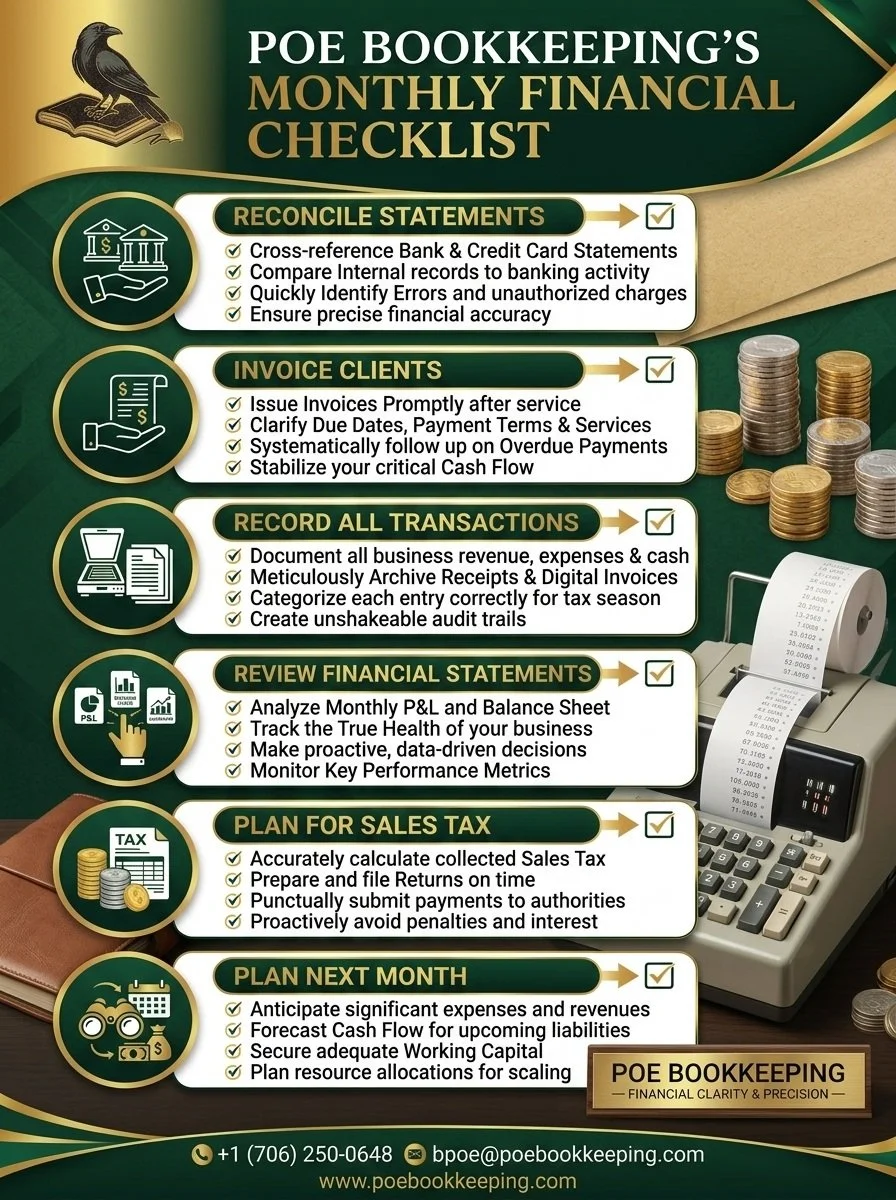
Keeping track of your small business finances is crucial to your long-term success. However, when you are managing daily operations, administrative tasks can easily become overwhelming. To ensure your financial records stay accurate, compliant, and up to date, establish a disciplined routine around these six key monthly bookkeeping checklist items.
1. Execute Thorough Bank and Credit Card Reconciliations
Reconciling your bank and credit card statements is a non-negotiable step in maintaining absolute financial accuracy. This process involves cross-referencing your internal accounting ledgers directly against your actual live banking statements. Routine reconciliation allows you to instantly identify manual entry errors, bank processing discrepancies, or unauthorized transactions, ensuring your records perfectly reflect reality.
2. Streamline and Enforce Client Invoicing
Invoicing promptly is the single most critical factor in maintaining a healthy cash flow. Ensure every invoice you issue contains comprehensive data, including explicit due dates, clear payment terms, and detailed line items describing the completed scope of work. Additionally, dedicate time each month to audit your accounts receivable and systematically follow up on overdue invoices or late client payments.
3. Record and Categorize Every Business Transaction
Every single dollar moving through your company must be meticulously documented. This includes capturing all revenue streams, operational expenses, and cash transactions. Make it a strict habit to archive digital copies of all receipts and vendor invoices, as these records serve as your primary legal evidence during tax season.
4. Perform a Strategic Review of Key Financial Statements
Analyzing your financial data once a month gives you an accurate snapshot of your operational performance. Focus on reviewing your three core financial sheets: the Balance Sheet to evaluate assets and liabilities, the Profit and Loss Statement to measure net margins, and the Cash Flow Statement to track liquid capital. Understanding these documents empowers you to make proactive, data-driven decisions.
5. Prepare and Submit Sales Tax Returns On Time
If your business model requires collecting sales tax from customers, managing these compliance deadlines is critical. Take time at the end of the month to calculate your exact collected tax liabilities and file your returns punctually with your local or state authority. Staying ahead of these schedules protects your business from expensive interest charges and compliance penalties.
6. Forecast and Plan for the Upcoming Month
Bookkeeping should be used as a forward-looking strategy, not just a historical log. Review your calendar and operational pipeline for the upcoming month to anticipate large variable expenses, seasonal dips, or expected revenue surges. Proactively planning your cash commitments ensures you always maintain adequate working capital to clear upcoming liabilities.
Secure Peace of Mind by Partnering with Professionals
Staying on top of a monthly bookkeeping checklist requires immense discipline and a sharp attention to detail. As an entrepreneur, your energy is best spent building client relationships and scaling your core business model—not drowning in monthly administrative tasks.
If managing your daily ledger is pulling you away from high-level growth, outsourcing your back office is a highly cost-effective investment.
Contact Poe Bookkeeping today to schedule a custom financial discovery session. Our certified team will streamline your monthly checklist, automate your expense tracking, and provide the absolute financial clarity you need to scale your business with total confidence.